
Places to visit in our area a few kilometers from the structure

Mount Cofano
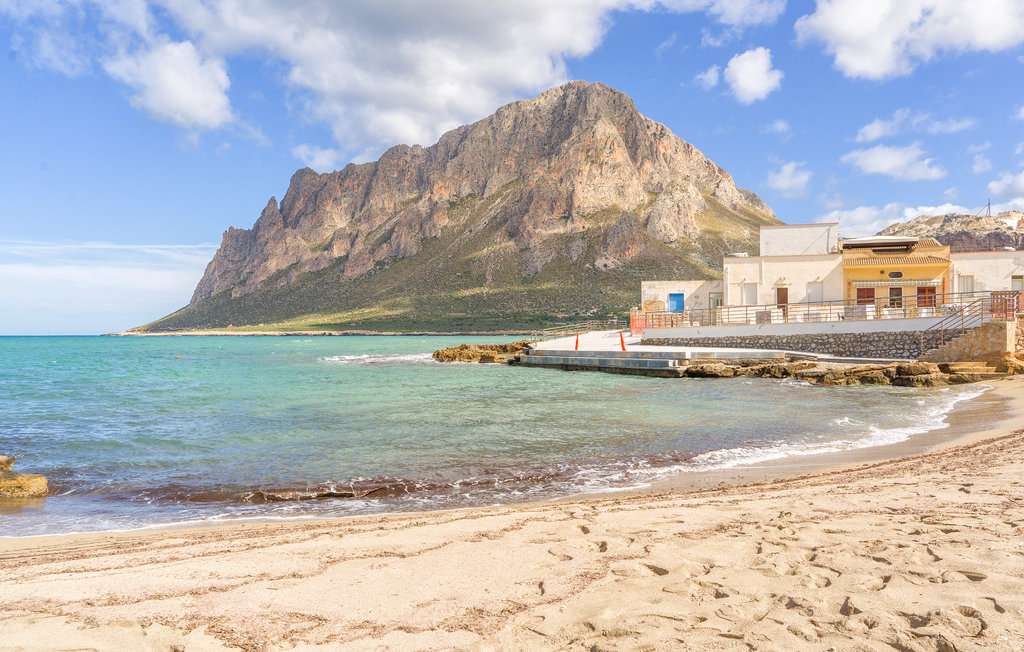
The Monte Cofano reserve, in the Custonaci area, is one of the most interesting natural places in the area, a monument produced by nature that offers trekking enthusiasts magnificent scenery. The Reserve can be reached from the side overlooking Trapani, via the village of Cornino, or from San Vito Lo Capo via a dirt road. For those who love trekking or mountain biking, a comfortable path allows you to circumnavigate the coast. For the more daring and with good athletic skills, the climb to the summit is proposed. At the top you can admire a breathtaking 360° panorama. Truly a unique experience. If the excursion takes place in the height of summer it is strongly recommended to avoid the hottest hours. The territory of the Reserve extends over the imposing mass of a massive limestone promontory jutting out into the sea, which reaches 659 meters above sea level immediately west of the area affected by the Zingaro Reserve, at the extreme southern tip of the gulf of the same name closed to the north by Capo S Vito. It is a Jurassic Dolomite promontory whose vegetation, typically Mediterranean, mainly presents aspects of garrigue with dwarf palm and ampelodesma. The rocky walls are rugged and steep, especially on the north-western side, past Punta del Saraceno in the south-west direction, where they drop sheer into the sea, creating small and delightful coves. A small Forestry road reaches almost to the summit, starting from Piano Alastre. Also interesting are the two towers located around Monte Cofano, inside the Reserve. One is that of San Giovanni on the Custonaci side and the other that of Tonnara (in the photo on the left)

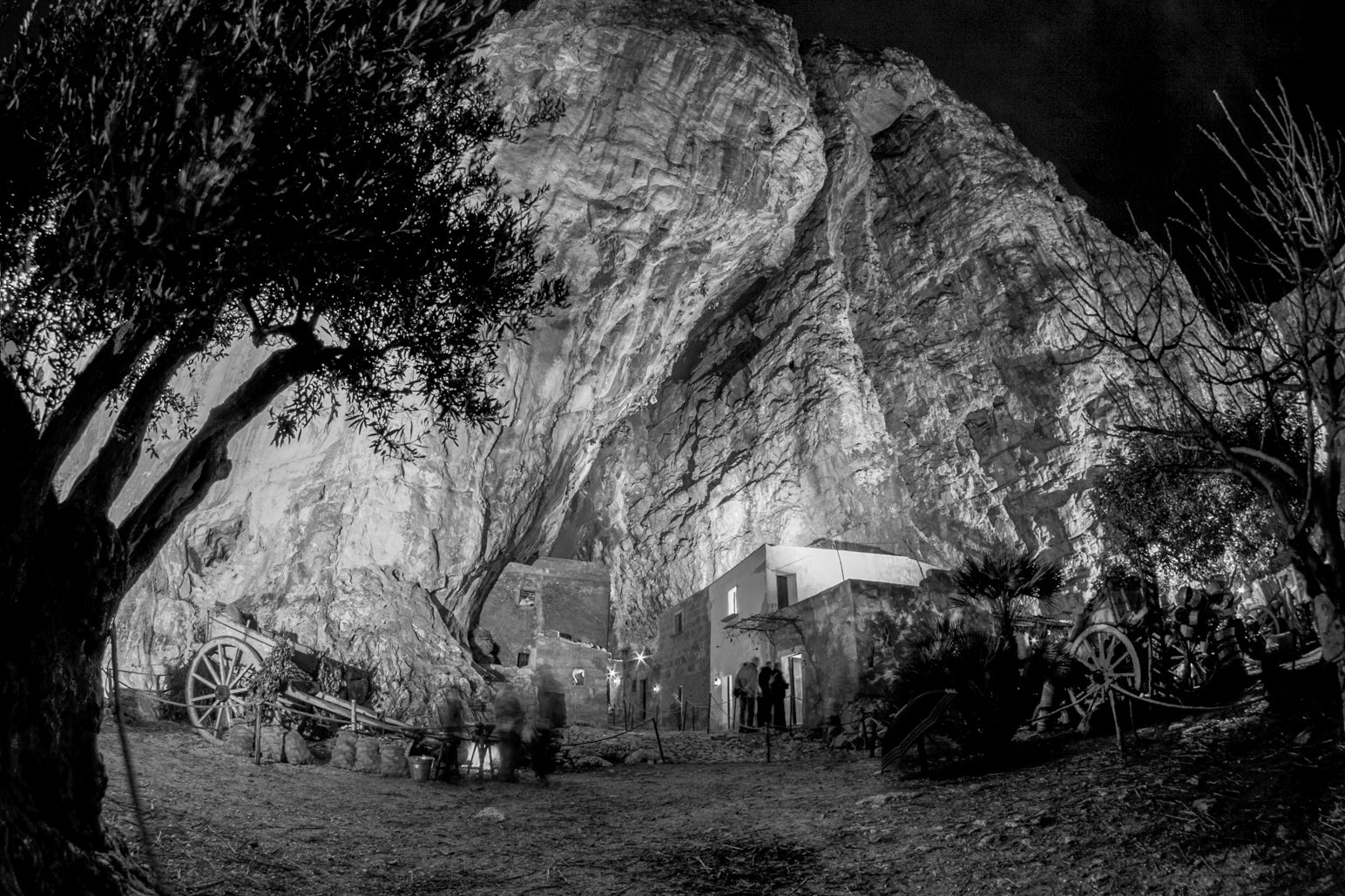
Inserted in the gorge of two mountains with the peaks of Monte Cofano as a backdrop, Grotta Mangiapane di Custonaci is one of the most fascinating places in western Sicily. In fact, just a few steps inside the inlet are enough to take a journey back in time and immerse yourself in an ancient village that still lives today, uninhabited, thanks to the commitment of the local population. The site is also part of a large complex of natural cavities called the Scurati Caves, on whose walls there remain artistic traces of ancient prehistoric populations. So let's go and discover this evocative corner of Sicily, also nicknamed the Uffizi Cave by many. Grotta Mangiapane has its origins in the Upper Paleolithic, a period in which this natural cavity in the Sicilian rock was used by primitive men as a refuge and escape route from dangers. Their presence was in fact attested by the first archaeological studies conducted by scholars such as Guido Dalla Rosa, Raymond Vaufrey and Sebastiano Tusa, who brought to light ancient flint tools, animal bones, paintings and small graffiti engraved on the walls. The particular aspect with which the place presents itself to visitors today, however, is the result of a nineteenth-century intervention. Since the 19th century, the inlet has been inhabited by a family of farmers and fishermen who built their homes and rooms for storing food here. In addition to houses and warehouses, however, there are stables, a wood-burning oven and a chapel which indicates that the area was frequented not only by the Mangiapane, but also by a large group of friends and fellow citizens from the surrounding areas. The family lived in the cave for about one hundred and fifty years, living off the land. Following the Second World War, however, all the heirs decided to move away from the village, which remained abandoned for about three decades. The final restoration that made it possible to recover this unique place in the world took place only in 1982 thanks to the commitment of a group of people from Custonace and Don Rosario Vanella, the last member of the Mangiapane.

Erice, a medieval village rich in history and legend, is located on the summit of the mountain of the same name, it is a place full of charm with cyclopean walls, narrow alleys and a suggestive view to the east over the Erice countryside and Trapani and the Egadi islands to the west. It houses the Castle dedicated to the Goddess Venus, the Pepoli Tower, recently restored and has become a beacon of multimedia peace on the Mediterranean, the Mother Church with the Gothic style bell tower, the Spanish Quarter and many other churches. It is also home to the Ettore Majorana international scientific culture centre. At any moment of the day Erice is covered in colors and magical atmospheres that leave the spectator amazed. A cable car connects Trapani with Erice in just 10 minutes allowing you to enjoy the magnificent view of Trapani and the Egadi islands. On particularly clear days you can even glimpse the Tunisian coast
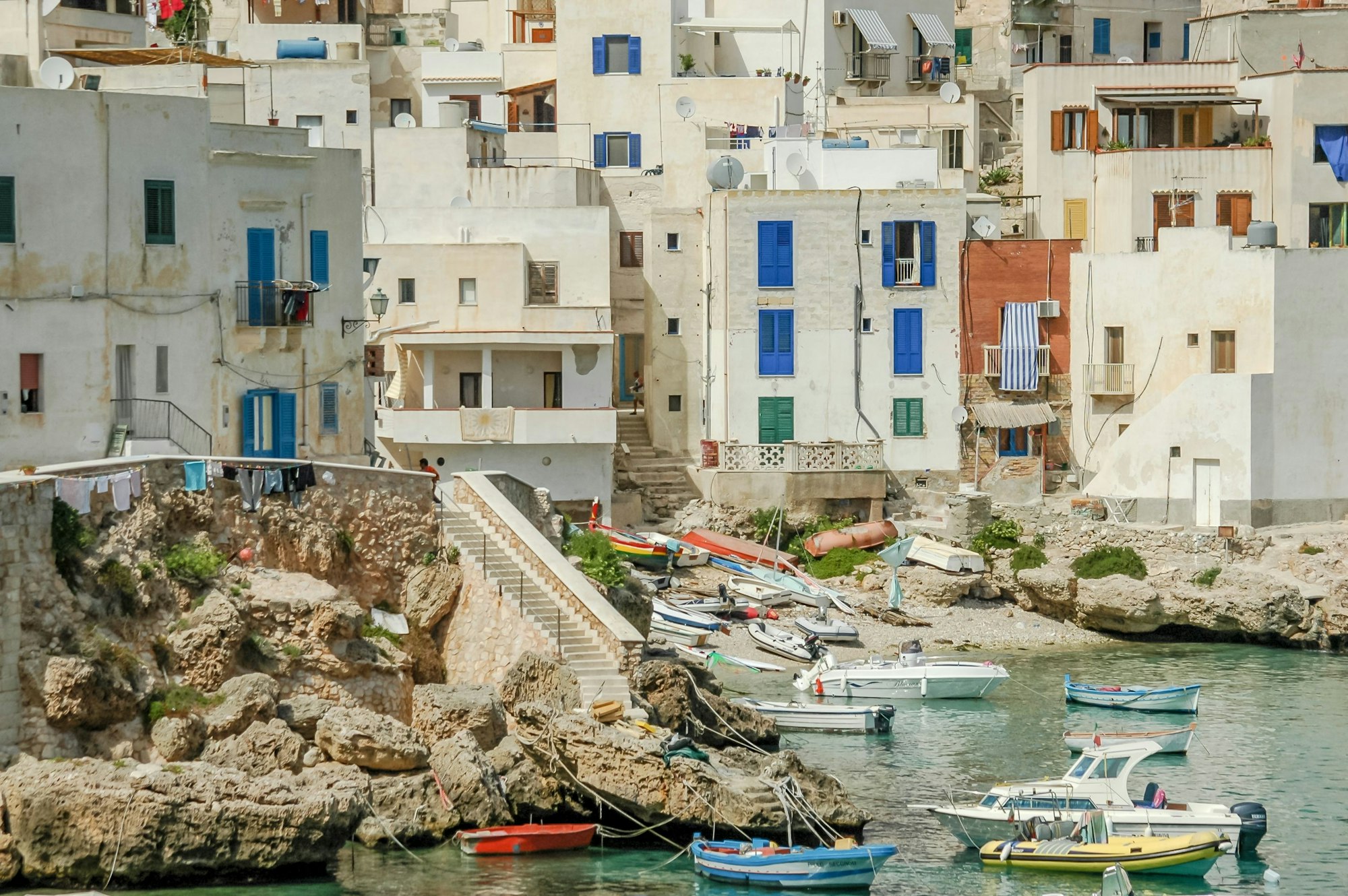
Three small islands of singular beauty with polychromatic landscapes and colors are part of the Egadi islands: Favignana, Levanzo and Marettimo. Favignana, characterized by a butterfly shape, is a true pearl of the Mediterranean with clear blue waters, white beaches, bays and rocks of the most varied shapes. Levanzo, jagged, is the smallest of the islands and offers numerous white pebble coves and presents a wild and uncontaminated landscape. It houses the Grotta del Genovese with archaeological finds of prehistoric origin. Marettimo, a mountainous island, with its characteristic natural caves, where the monk seal appears, and seabeds rich in life, is the ideal place for those who love the sea, nature, trekking and excursions.
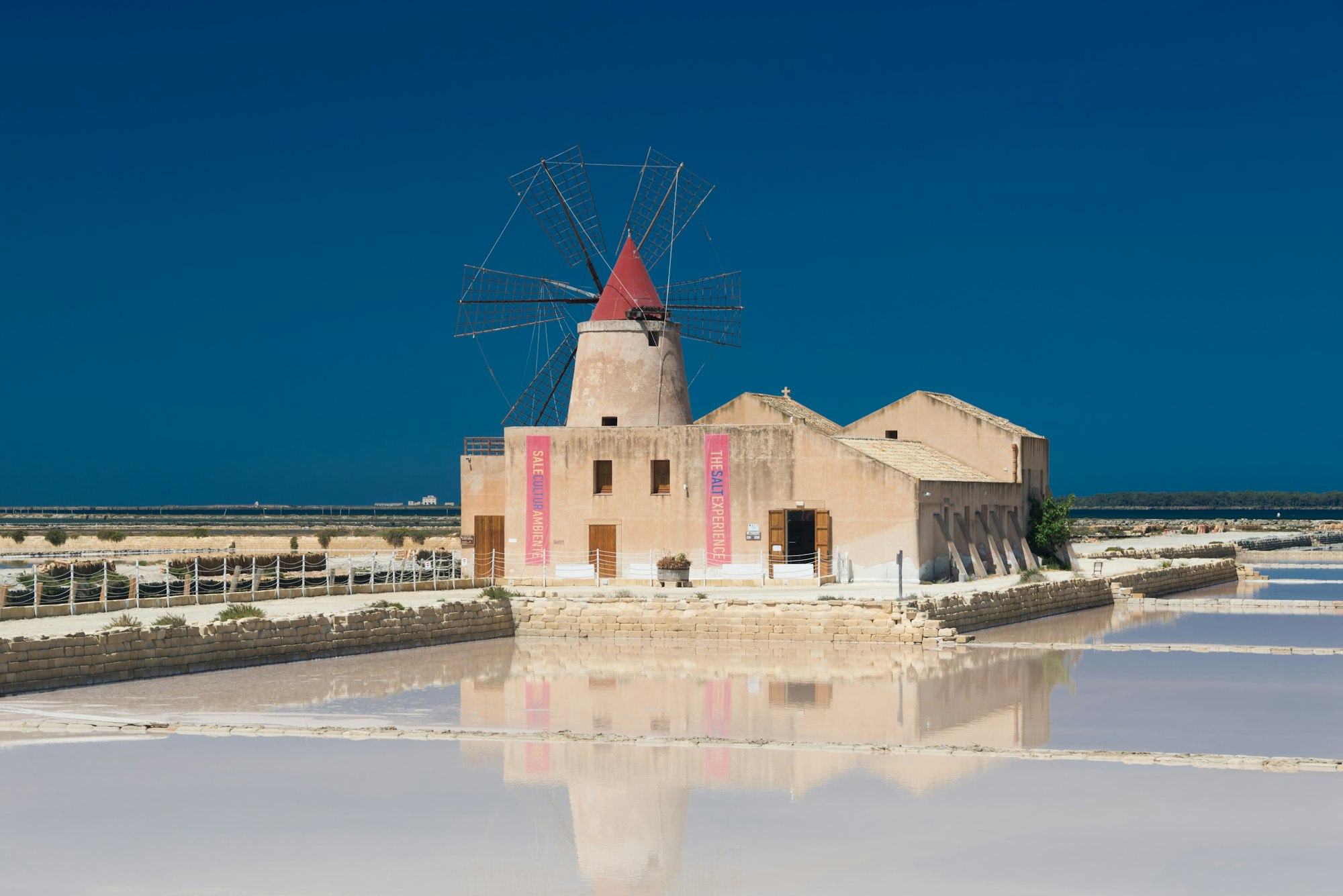
Trapani, characteristic for its sickle shape from which its ancient Greek name "Drepanon" derives, is defined as the city of the two seas, and is in fact nestled on a promontory bathed on all three sides by the sea. Trapani and in particular its historic center which boasts places of undoubted beauty and monuments of inestimable value, testifies to the succession of different cultures in every corner, offering the visitor a view of noble palaces, watchtowers, city walls and sea sceneries exclusive. There are numerous churches in the historic center, testimony to the Gothic-religious architecture of the 16th century. Among these, the Church of the Jesuit College stands out, rich in precious marble sculptures that look like lace, the Church of Sant'Agostino with its wonderful rose window, the Cathedral of San Lorenzo and the Church of Purgatory where the Mysteries of Trapani are preserved... wooden groups of great artistic value. Also worth visiting are the seventeenth-century Tower of Ligny which houses the prehistoric museum, the Colombaia and the Pepoli Museum which collects, among other things, splendid works by goldsmiths and coral engravers who made Trapani between the 15th and 17th centuries one of the European capitals of this art. Along the salt road that connects Trapani to Marsala, the Salt Museum is worth a visit with its windmills, mountains of salt and salt pans with the possibility for the visitor to retrace the various historical stages and follow the processing phases of the 'White gold.
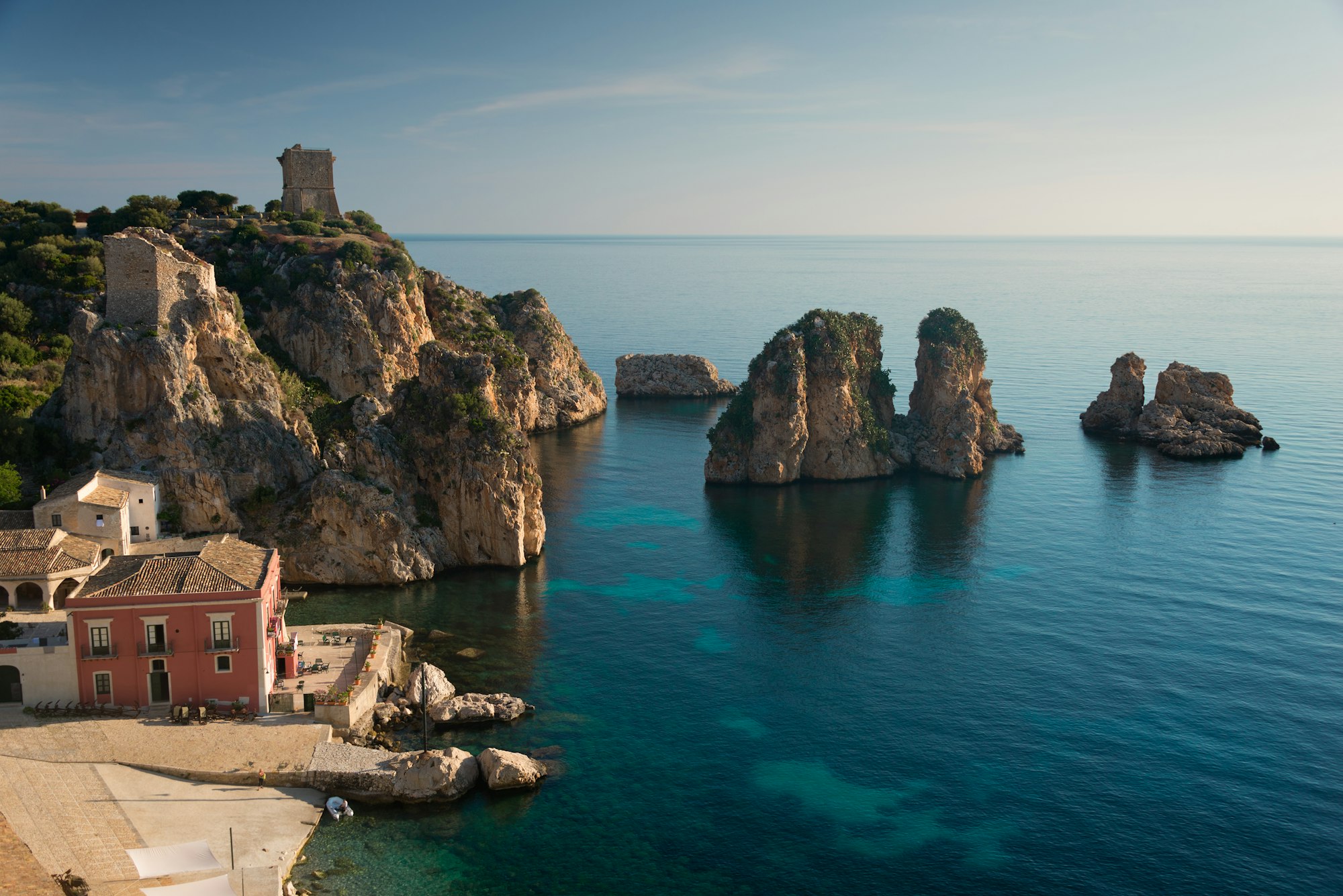
Above the Tonnara you can admire two towers: one dating back to 1200, of which few ruins remain today and the other dating back to 1400, the work of the Florentine engineer Camilliani who is not part of the Tonnara district.
At first the nucleus of the Tonnara consisted of the factory leaning against the rock and the tower built for enemy sighting in defense of Scopello and the Tonnara itself.
In 1468 the aristocratic Trapani family of San Clemente he obtained the concession and the first expansion works began.
The tuna fishery was enlarged, bringing it to the shape it still has today. Furthermore, the buildings of the farmhouse are also due to the San Clemente family, as well as the tuna fishery keeper's house, the warehouses and the carpentry shop, the loggia where the tuna fish were hung for the various phases of meat processing, the keeper's oven and the scagno, i.e. the room where the crew was paid.
The management of the San Clemente family was followed by that of the Jesuits. In recent years, further changes and improvements were made. In fact, the Jesuits expanded and transformed both the boat storage area and the fishermen's accommodation and a small church was also built.
The management of the Society of Jesus was followed by that of the Florio family.
Ignazio Florio purchased two eighths of the tuna factory in 1874. He was responsible for many modernizations as well as the raising of one of the buildings of the baglio to accommodate the new rooms used for administration.
Under Florio management there was a notable increase in the catch. Between 1896 and 1905 the quantity of tuna caught was between 1043 and 2480 quintals. Between 1922 and 1962 there was an average catch of 472 tuna.
However, as the years passed, the presence of tuna in the Mediterranean began to decline. Between 1961 and 1970 the catch barely reached 600/800 quintals. The last slaughter was carried out in the 1980s. In 1981 the tuna fishery was used exclusively for biological experiments.
Today the Scopello tuna fishery hosts a diving center which organizes dives and dinghy excursions.
The tuna fishery can be visited every day until 7pm.
By paying an entrance fee of 15 euros you will be able to admire the beautiful building, the entrance hall, the ancient anchors as well as enjoy the suggestive view of the bay and the stacks and last but not least take a bath in this dream sea!
If you wish, it will also be possible to take a guided tour inside the tuna fishery to delve deeper into the value that this place holds, its history and the sacrifice of the men who practiced tuna fishing "the old-fashioned way".
Cofanomare B&B. Via Palermo, 48 91015 Custonaci (TP)
Discover our Holiday Homes a few steps from the sea! The Gulf of Cofano
 English
 Italian